Barriers to Access to Justice for Disabled People - Dr Mark Burgin
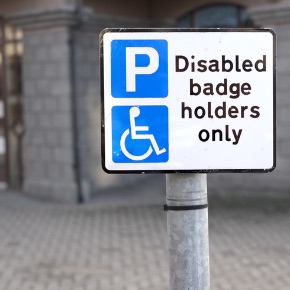
28/07/25. Dr Mark Burgin is a disability analyst and explains why disabled people are disproportionately at risk of poor outcomes in legal cases.
There are serious issues in law such as overly complex legal processes and I would recommend a simple three part process.
- Chronological description of the facts of the case provided as a PDF.
- Low cost general expert report that reviews the evidence.
- Form that refers to the first two and indicates a possible resolution.
This would work as well with a family law, criminal law or civil law cases and is likely to be as effective as more complex systems.
Introduction
There are physical, psychological and hidden disabilities and each can impact access to justice. The commonest problems arise due to lack of disability training across the whole legal profession. Lawyers can, and sometimes do, withdraw from representing a client they deem 'too demanding,' often without a clear mechanism to ensure the client's ongoing representation.
The spectacular growth of professional negligence cases against lawyers reflects the genuine unhappiness on both sides. The lawyers feel that they are unfairly attacked and that the fees do not cover the additional costs. Following the standard approaches does not satisfy their client’s needs and leads to disappointment.
The Equality Act 2010 has raised the stakes, it is no longer enough to offer a good job. The professional must ensure that the person’s disability does not disadvantage them. When their disability is psychological the lack of training amongst legal professionals can cause significant disadvantage.
Lack of “Reasonable Adjustments” in courts
Legal systems fail to provide reasonable adjustments that would benefit everyone. Simple steps such as providing an A4 single page summary of the case would ensure that everyone, including those without disabilities can understand what is happening. It is not uncommon for people to repeatedly ask the same question.
Few courts provide adequate provisions for frail persons such as having comfortable chairs in the body of the court to prevent pressure sores. Having a wheelchair for use in the court building can reduce the risk of overtiring or fatigue. Having a room to lie down in for those become unwell can avoid paramedics having to treat people in public spaces.
Courts rarely have access to even the most basic transport services for litigants, nor are they typically able to coordinate with health services for transportation needs. People who struggle to attend meetings for instance due to mental health are rarely able to obtain support for technical difficulties with video attendance. It can be difficult to hear or see what is happening in the courtroom even for able-bodied persons.
Relationship breakdown with the solicitors
Problems can occur before the case gets to court and the commonest issue is communication difficulties. Lawyers’ letters are often incomprehensible to the lay person. There appears to be little improvement in the understanding of often long complex legal documents by the public.
Medical letters contain summaries, action lists and future plans so the person can easily understand what is happening. An intelligent litigant in person observed that legal documents look as if they were written in the 19th century. Often even degree-level people have to use AI tools to decipher what the letter is saying.
Most people have a limit on their ability to cope with stress and unfortunately will have an outburst when pushed beyond that limit. Whilst I do not accept this type of behaviour I can understand their arguments. When a person is paying for a service that they do not understand they find it hard to keep control.
Obtaining expert evidence
As most cases are determined on the basis of expert evidence it would seem obvious that the first step is to get an expert report. Old fashioned arguments that experts cost thousands of pounds have been challenged with the advent of the low cost expert. Without an expert report the case can trundle on through the courts for years without any chance of being resolved.
There are significant problems with a litigant in person LiP obtaining an expert report. Most experts are hesitant to engage with Litigants in Person (LiPs) due to challenging past experiences, where individuals with highly persistent or complex needs may be overrepresented. However LiPs may have been made unwell by the process and lost trust in professionals.
The low cost general expert can provide a unique service, considering all the evidence and providing a clear opinion with a quick turnaround. This report can start the legal process and identify if there is missing evidence or an issue that will be challenging. It is not uncommon for the low cost general expert to resolve a case that specialists have been unable to move forward.
Conclusions
Disabled people are at a significant disadvantage in the justice system, the reports are often too specialised to deal with the issues. Furthermore they may have trust issues yet are expected to trust their lawyer and they may not be offered reasonable adjustments. The SRA and courts are reluctant to support such challenges for fear of opening a flood gate.
Overcoming barriers to justice are low cost, simple and may improve access to all people. Writing letters in an accessible way can be stressful for lawyers at first, but it soon becomes second nature. Obtaining a low-cost general expert report is far simpler than trying to determine the correct specialist. Treating frail people with dignity requires a few low-cost pieces of equipment that the health service can help provide.
To the reader here is a challenge: What can you do to remove the barriers to justice for your clients? These are barriers for able bodied as well as disabled clients may open floodgates to new clients. Low-cost general experts can help you develop a one-stop process and reduce costs. Having a simpler system will reduce the cognitive strain on your team and improve satisfaction.
Doctor Mark Burgin, BM BCh (oxon) MRCGP is a Disability Analyst and is on the General Practitioner Specialist Register.
Dr. Burgin can be contacted on This email address is being protected from spambots. You need JavaScript enabled to view it. and 0845 331 3304 websites drmarkburgin.co.uk and gecko-alligator-babx.squarespace.com
This is part of a series of articles by Dr. Mark Burgin. The opinions expressed in this article are the author's own, not those of Law Brief Publishing Ltd, and are not necessarily commensurate with general legal or medico-legal expert consensus of opinion and/or literature. Any medical content is not exhaustive but at a level for the non-medical reader to understand.
Image ©iStockphoto.com/disabledparking





![Appeal judge rules that credit hire company has no costs liability following a finding of fundamental dishonesty in personal injury case: RSA v. Fastrack Solutions Limited [2023] 4 WLUK 92 - David Bowden, Erimus Chambers](/content/images/resized/images/stories/carkeys_72_72.jpg)


